
Heart Bypass Surgery Explained: Procedure, Risks & Recovery
Center : Heart Center
Article by : Dr. Patcharee Pawasuttikul
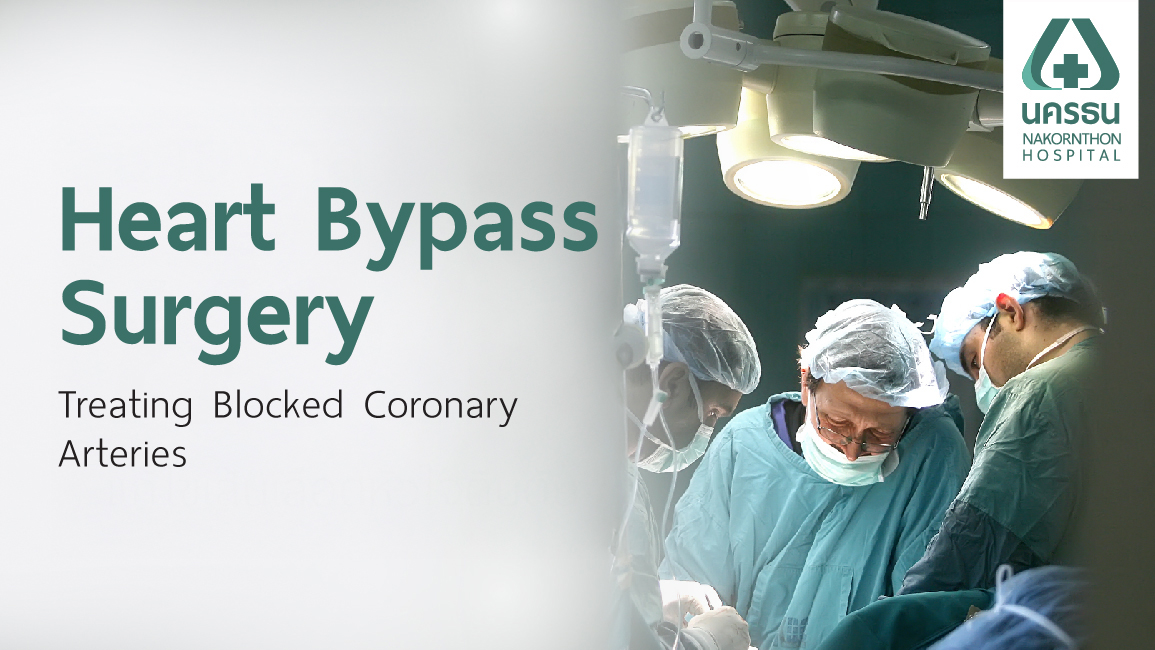
- Heart bypass surgery (CABG) creates new pathways around blocked coronary arteries, restoring blood flow to the heart muscle using vessels taken from the chest, wrist, or leg.
- Surgery is indicated when blockages exceed 70%, when multiple arteries are affected, when angioplasty is not suitable, or when a heart attack or life-threatening arrhythmia is present.
- Two main surgical approaches are used: On-Pump CABG (heart stopped, cardiopulmonary bypass machine used) and Off-Pump CABG (heart beating throughout), each with specific advantages depending on the patient's condition.
- Bypass surgery recovery involves approximately one week in hospital, return to light activities within two months, and return to sports within four to six months.
- Coronary artery bypass risks are low in experienced hands; most complications are manageable, and the procedure significantly reduces the long-term risk of heart attack and cardiac death in appropriate candidates.
- Over 90% of bypass patients experience improved blood flow, reduced chest pain, and better quality of life after surgery.
- Nakornthon Heart Center is staffed by specialist cardiac surgeons and cardiologists with multilingual support for international patients.
Bypass surgery or coronary artery bypass graft surgery (CABG) treats patients with coronary artery blockages greater than 70% or those who have suffered a heart attack. This procedure is also indicated for cases with multiple blocked arteries or blockages in specific locations where balloon angioplasty and stent placement might damage the blood vessels. This treatment option effectively reduces mortality rates from acute heart failure.
Table of Contents
- What is Coronary Artery Bypass Graft (Open Heart) Surgery?
- Indications: When Is a Coronary Artery Bypass Surgery Needed?
- What Conditions are Treated by Coronary Artery Bypass Surgery?
- Heart Bypass Surgery Explained: Pre-Operative Diagnosis & Preparation
- Types of Coronary Artery Bypass Graft Surgery
- Bypass Surgery Recovery: What to Expect
- Advantages of Coronary Artery Bypass Surgery
- Coronary Artery Bypass Surgery Risks & Complications
- Coronary Artery Bypass Surgery (CABG) at Nakornthon Hospital
- Frequently Asked Questions (FAQs) About Heart Bypass Surgery
- Free Online Consultation with a Specialist
What is Coronary Artery Bypass Graft (Open Heart) Surgery?

Heart bypass surgery, or coronary artery bypass grafting (CABG), is a surgical procedure that creates alternative pathways around blocked areas of coronary arteries to improve blood circulation. The blood vessels used for this procedure include arteries from the chest area, arteries from the wrist, and veins from the legs. The choice of blood vessel depends on the quality of vessels available and which location provides the better option.
Indications: When Is a Coronary Artery Bypass Surgery Needed?
The decision to perform heart bypass surgery requires evaluation by a cardiac specialist who considers the severity of coronary artery blockage, patient symptoms, overall health, and other risk factors, including:
- Severe coronary artery disease
- Myocardial ischemia or myocardial infarction (heart attack)
- Severe chest pain that does not respond to medication
- Multiple blocked arteries or blockages in locations where balloon angioplasty and stent placement might damage blood vessels
- Complications following coronary stent placement that cannot be corrected
- Ongoing myocardial ischemia after balloon angioplasty and coronary stent placement
- Life-threatening cardiac arrhythmias related to myocardial ischemia
- The presence of other heart conditions, such as heart valve regurgitation or ventricular septal rupture, etc.
What Conditions are Treated by Coronary Artery Bypass Surgery?
Coronary artery bypass surgery primarily treats conditions related to abnormal blood circulation to the heart, especially the following diseases:
- Severe or multi-vessel coronary artery disease
- Chronic myocardial ischemia, a condition where heart muscle continuously receives insufficient blood supply
- Acute myocardial infarction (heart attack)
- Congenital coronary artery abnormalities
- Life-threatening cardiac arrhythmias related to myocardial ischemia
- Heart failure resulting from myocardial ischemia
- Thrombosis (blood clot formation)
- Arteriosclerosis (hardening of arteries)

Heart Bypass Surgery Explained: Pre-Operative Diagnosis & Preparation
Before undergoing coronary artery bypass surgery, patients must receive thorough diagnostic evaluations to assess their overall physical condition, the severity of coronary artery disease, and readiness for surgery. The main diagnostic procedures for the CABG surgery include:
- Medical history taking, such as inquiring about chest pain symptoms (frequency, severity, duration, and triggers), related symptoms like difficulty breathing, fatigue, palpitations, underlying medical conditions, history of cardiac treatment, current medications, drug allergies, smoking history, alcohol consumption, and family history of heart disease
- Physical examination and laboratory tests
- Cardiac assessment, including electrocardiogram, echocardiogram, exercise stress test, cardiac catheterization and coronary angiography
- Other examinations, such as a chest X-ray and blood tests, are conducted for reserve blood preparation.
Types of Coronary Artery Bypass Graft Surgery

There are several methods of coronary artery bypass surgery. The cardiac surgeon will diagnose and decide which method should be used to achieve the best outcome:
On-Pump CABG (Using a Cardiopulmonary Bypass Machine)
This is the traditional coronary artery bypass surgery method. The surgeon temporarily stops the patient's heart during surgery and uses a cardiopulmonary bypass machine to function in place of the lungs for oxygen and carbon dioxide exchange, and to pump blood to various parts of the body without passing through the heart. This allows the surgeon to operate with precision since the heart is still. It is suitable for patients with multiple coronary artery blockages or complex blockage locations.
Off-Pump CABG (Without Cardiopulmonary Bypass Machine)
In this method, the surgeon does not stop the patient's heart during surgery and does not use special equipment for blood pumping. The surgery is performed while the heart is still beating by using a Local Stabilizer to immobilize the area of the heart where the blood vessel connection is being made, while other parts of the heart continue to beat normally. This approach helps avoid complications and coronary artery bypass risks that may arise from using the cardiopulmonary bypass machine, such as systemic inflammation, surgical wound infection, reduced mortality after surgery for patients with chronic kidney failure, and shorter hospital recovery time.
Bypass Surgery Recovery: What to Expect
After undergoing coronary artery bypass surgery, patients should follow these guidelines:
- Bypass surgery recovery time: Patients need to recover in the hospital for approximately 1 week for monitoring and follow-up treatment, after which doctors will allow them to continue recovery at home.
- At home, patients should follow their doctor's instructions, take medications as prescribed, and strictly follow up with their physician.
- When the surgical wound is completely healed, approximately 10 days after surgery, patients can shower.
- Patients must control risk factors such as diabetes, high blood pressure and avoid smoking and alcoholic beverages.
- Adapt healthy lifestyle habits, such as eating nutritious food, exercising regularly, and managing stress.
- Avoid foods that increase blood cholesterol and blood sugar; when cooking, use vegetable oils instead of butter or animal fats, and choose boiling, steaming, and baking methods instead of frying.
- Patients can return to light normal activities within 2 months after the bypass surgery and can resume sports within 4-6 months, depending on each individual's physical strength.
- If any of these post-operative symptoms occur, such as high fever, chills, swollen and red wound area, abnormal pain or discharge, difficulty breathing, severe chest pain, palpitations, dizziness or fainting, severe leg swelling, or severe leg pain—seek medical attention immediately.
Advantages of Coronary Artery Bypass Surgery

Coronary artery bypass surgery offers several benefits, especially for patients with severe coronary artery disease. The main advantages include:
- Improved blood circulation to the heart muscle — Bypass surgery helps direct blood to blocked vessels, ensuring the heart muscle receives sufficient oxygen and nutrients, and reducing chest pain symptoms.
- Reduced risk of a heart attack — Surgery can decrease the chance of acute myocardial ischemia.
- Increased ability to perform activities and improved quality of life — After recovery, bypass surgery patients can engage in more activities such as walking, exercising, and working, with less fatigue.
- For some patients, especially those with severe coronary artery disease, coronary artery bypass surgery may reduce the risk of death from heart disease.
- Some patients may be able to reduce their use of anti-angina medications or blood pressure medications after surgery (though some medications, such as antiplatelet drugs, will still be a lifelong requirement).
Coronary Artery Bypass Surgery Risks & Complications
Coronary artery bypass surgery carries risks because it is major surgery, and complications may occur. However, the chance of complications is low, and most can be addressed. Possible complications include:
- Infection at the surgical site
- Bleeding
- Kidney failure
- Stroke
- Cardiac arrhythmia
- Heart failure or acute myocardial infarction
Coronary Artery Bypass Surgery (CABG) at Nakornthon Hospital
Choosing the right hospital is a crucial factor in treating patients with coronary artery disease or blockage through coronary artery bypass surgery. Nakornthon Hospital's Heart Center is fully equipped with specialized cardiac physicians, cardiac surgeons, and a nursing team with extensive cardiac experience to meet international standards of care.
Nakornthon Hospital is particularly well-positioned to serve international patients residing in Thailand who seek effective treatments and recovery without extended hospital stays. The hospital's state-of-the-art medical equipment and comprehensive facilities ensure efficient, targeted care tailored to patient needs. Our advanced surgical technologies and techniques, and specialist medical team are a significant advantage for expatriates and international visitors.
Additionally, our multilingual staff ensures clear, transparent communication throughout the treatment process, making Nakornthon Hospital the preferred choice for international patients seeking high-quality cardiac care with faster recovery times in Thailand. Consult with our specialists about Coronary Artery Bypass Graft Surgery, or other coronary artery disease treatment without surgery.
For more information, please contact:
- Facebook Fanpage: Nakornthon Hospital - International Patient
- LINE Official: @nakornthoninter
- Tel: 02-450-9999 (Available 24 hours)
Frequently Asked Questions (FAQs) About Heart Bypass Surgery
-
Q: How long does heart bypass surgery at Nakornthon Hospital take?
A: A coronary artery bypass surgery typically takes 3–6 hours, depending on the number of bypasses being performed and the complexity of the coronary anatomy. More grafts and more complex disease generally mean a longer procedure. Time in the operating room also includes preparation, anesthesia induction, and closure.
-
Q: How long do bypass grafts last?
A: Arterial grafts, particularly the internal mammary artery, have excellent long-term patency, with studies showing more than 90% remain open after 10 years. Vein grafts from the leg have a shorter functional lifespan, with patency rates declining more noticeably after 10 years. Maintaining a heart-healthy lifestyle, controlling risk factors, and taking prescribed medications consistently all significantly improve graft longevity.
-
Q: Can coronary arteries get blocked again after a bypass surgery?
A: Yes, both the native coronary arteries and the bypass grafts themselves can develop new blockages over time. This is more common in vein grafts than arterial grafts. The risk is significantly reduced by controlling cholesterol, blood pressure, and blood sugar, stopping smoking, exercising regularly, eating a heart-healthy diet, and taking antiplatelet medications as prescribed. Regular cardiac follow-up allows early detection of any new disease after bypass surgery recovery.
-
Q: What foods should I avoid after a bypass surgery?
A: Avoid foods high in saturated fat, trans fat, cholesterol, and added sugar, as these contribute to the arterial plaque buildup that increases the risk of coronary disease. Specifically, fatty cuts of red meat, processed meats, full-fat dairy, fried foods, butter and animal fats, pastries, and sugary drinks. Choose lean proteins, oily fish, vegetables, fruit, whole grains, and healthy plant-based fats. Cook by boiling, steaming, or baking rather than frying.
-
Q: How much does heart bypass surgery cost in Thailand?
A: Heart bypass surgery in Thailand is significantly more affordable than equivalent surgery in the US, UK, or Australia, typically 50–70% less, without compromising on surgical expertise, implant or equipment quality, or post-operative care standards. The total cost at Nakornthon Hospital depends on the number of bypass grafts, surgical approach, length of hospital stay, and any additional care required. Contact our Heart Center directly for a personalized cost estimate based on your specific diagnosis and treatment plan.

Free Online Consultation

Article of Heart Center

.jpg)