
Comparing Dental Implants and Dentures: How to Find Out Which Suits You Best
Center : Dental Center
Article by : Dr. Natthaphat Thepseri
Missing teeth affect how you chew, how you speak, and, over the long-term, how your jawbone holds its shape. The choice between dental implants vs. dentures depends on your bone health, budget, lifestyle, and how many teeth you need to replace. This guide breaks down the differences and explains a third option many patients overlook, which is implant-supported dentures.
A missing tooth impacts your ability to chew, your speech clarity, and the long-term structure of your jawbone. Adults typically weigh the pros and cons of dental implants vs dentures. They are both successful approaches, but they function differently and yield varied long-term effects. Consider your bone, the number of teeth to replace, your timeframe, and budget when choosing our service at Dental Center, Nakornthon Hospital.
Table of Contents
- What Is the Difference Between Dental Implants and Dentures?
- Dental Implants vs. Dentures: A Direct Comparison
- What Are Implant-Supported Dentures?
- How to Know Which Option Is Right for You
- Explore Dental Implants and Dentures at Nakornthon Hospital Dental Center in Bangkok
- Frequently Asked Questions About Dental Implants vs. Denture
- Free Online Consultation with a Specialist
What Is the Difference Between Dental Implants and Dentures?
What Are Dental Implants?
A dental implant procedure involves placing a titanium post into the jawbone, which acts as an artificial tooth root. Key features include:
- Fuses with the bone over several weeks, a process known as osseointegration.
- Supports a crown, bridge, or full set of artificial teeth on to
- Functions and feels like a natural tooth: fixed in place, no removal required
- Stimulates the jawbone to prevent bone loss.
- Suitable for replacing a single tooth, several teeth, or a full arch.
What Are Dentures?
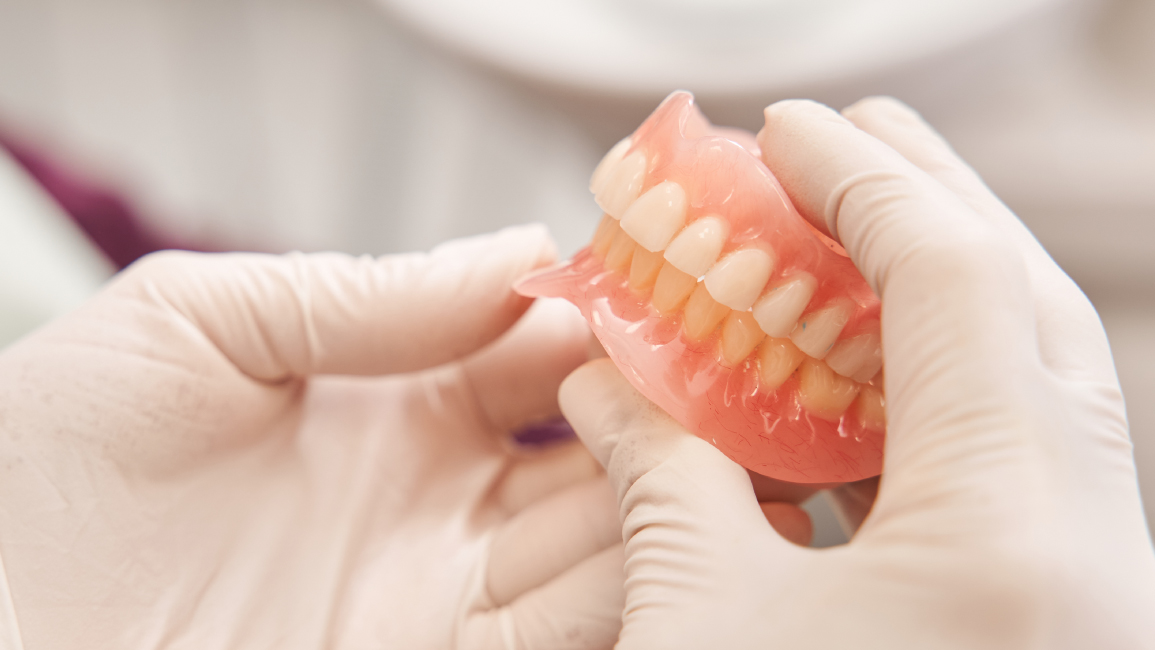
Dentures are removable artificial teeth that rest on the gum tissue. Key features include:
- Available as complete dentures (a full set) or partial dentures (filling specific gaps).
- Removable for cleaning.
- Do not fuse with the jawbone, so the bone underneath gradually shrinks over time (a process called resorption).
- More affordable upfront.
- Requires no surgery.
Dental Implants vs. Dentures: A Direct Comparison
Dental implants in Thailand are more affordable than the same treatment in Western countries, with no compromise in materials or clinical standards. However, cost largely depends on bone condition, the number of implants needed, and whether a bone graft is required.
What Are Implant-Supported Dentures?
Implant-supported dentures are a middle option: a denture held in place by two to four dental implants in the jaw, rather than resting on the gums alone. Key advantages include the following:
- Do not slip or require adhesives.
- Significantly slow bone shrinkage compared to traditional dentures.
- Usually removable for cleaning, unlike a fully fixed implant restoration.
- A more stable, bone-preserving option than traditional dentures, without the cost of a full fixed implant bridge.
- Well-suited for patients replacing a full set of teeth.
At Nakornthon Hospital Dental Center, implant-supported dentures are planned using digital CBCT 3D imaging (a detailed 3D X-ray of the jaw) and guided implant placement, the same precise workflow used for single and multiple implants.

How to Know Which Option Is Right for You
Best Candidates for Dental Implants:
- You are missing one, several, or all of your teeth and have enough bone density.
- You want a permanent, fixed solution that functions like natural teeth.
- You are prepared for a staged treatment plan and a healing period.
Best Candidates for Dentures:
- You need a faster solution without surgery.
- You cannot have surgery due to medical conditions or significant bone loss.
- Upfront cost is the deciding factor.
- You are using dentures as a temporary solution while preparing for implants later.
Best Candidates for Supported Dentures:
- You are replacing a full set of teeth and want better stability than traditional dentures.
- You want to slow bone shrinkage without paying for a full fixed implant bridge.
- You prefer a removable option that is anchored securely in place.
Explore Dental Implants and Dentures at Nakornthon Hospital Dental Center in Bangkok
Nakornthon Hospital Dental Center offers every type of tooth replacement: single implants, multiple implants, full-arch restorations, implant-supported dentures, and complete or partial conventional dentures. Our standards include:
- Digital workflow for every implant case: CBCT 3D imaging maps the bone, nerves, and tooth structure before surgery.
- Guided implant planning: Software simulates placement in advance, and a custom surgical guide is used during the procedure.
- iTero oral scanner: Replaces traditional impressions for denture and prosthetic planning, making the process more comfortable and more accurate.
- HA-certified facility: Hospital-grade sterilization standards across all dental procedures.
- English-speaking team: Full treatment planning support for international patients.
The choice between these two proven solutions hinges on your bone health, desired timeline, and long-term dental goals. For a clear recommendation based on your own clinical picture, make an appointment with the Nakornthon Hospital Dental Center.
Contact & Appointments - Dental Center
- Facebook Fanpage: Nakornthon Hospital - International Patient
- LINE Official: @nakornthoninter
- Open: Daily, Monday to Sunday, 9:00 AM to 7:00 PM
- Tel: 02-450-9999 1046-1047
Frequently Asked Questions About Dental Implants vs. Denture
-
Q: What is the difference between dental implants and dentures?
A: Dental implants are titanium posts placed into the jawbone to act as artificial tooth roots, supporting a fixed crown, bridge, or full set of teeth on top. Dentures are removable artificial teeth that rest on the gum tissue. Implants are permanent, stimulate the jawbone to prevent bone loss, and function like natural teeth. Dentures are removable, more affordable upfront, and require no surgery, but the bone underneath gradually shrinks over time.
-
Q: Which is better, dental implants or dentures?
A: Neither option is universally better. The right choice depends on your bone density, overall health, budget, and how many teeth you need to replace. Dental implants offer better long-term function, comfort, and bone preservation, making them the preferred option for patients who can have surgery. Dentures are a faster, more affordable solution and remain the practical choice for patients with significant bone loss or medical conditions that rule out surgery
-
Q: Are implant-supported dentures available in Thailand?
A: Yes. Implant-supported dentures are offered at Nakornthon Hospital Dental Center in Bangkok. Two to four implants are placed in the jaw to anchor a removable denture, so they do not slip, do not require adhesives, and significantly slow bone shrinkage compared to traditional dentures. They are planned using digital CBCT imaging and guided implant placement.
-
Q: How long do dental implants and dentures last?
A: Dental implants can last a lifetime with proper care. The titanium post itself rarely fails, though the crown attached to it may need replacement after 15 to 20 years. Dentures typically require relining, adjusting, or full replacement every 5 to 8 years as the underlying bone and gum tissue change shape.

Free Online Consultation
Article of Dental Center