
Is All-on-4 Dental Implants the Right Choice for You
Center : Dental Center
Article by : Dr. Natthaphat Thepseri
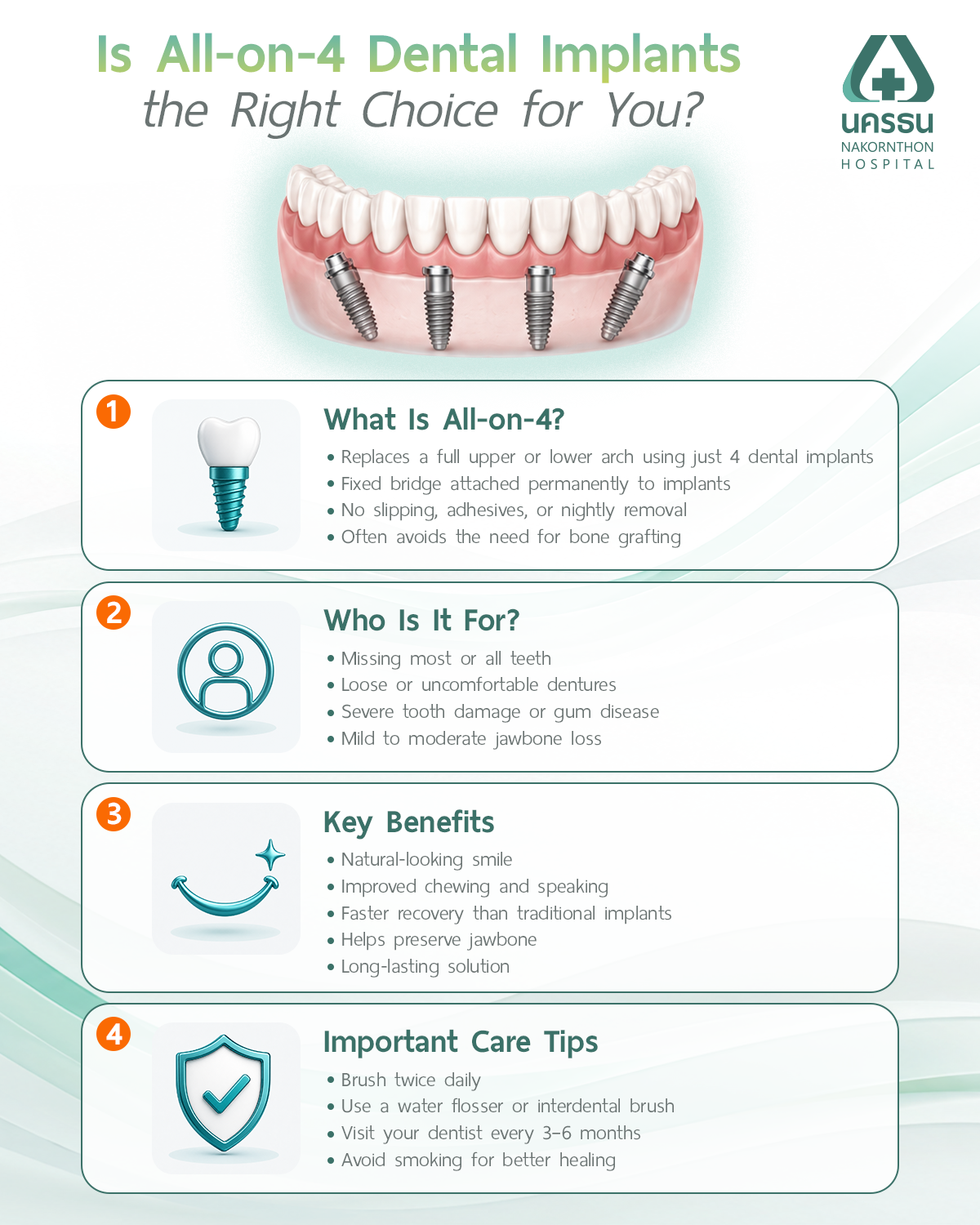
- All-on-4 dental implants replace a full upper or lower arch of teeth using just four titanium implants, with a fixed bridge attached on top.
- Two implants are placed vertically at the front of the jaw and two are angled at the back, which maximizes contact with available bone and often eliminates the need for bone grafting..
- Most patients leave with a temporary fixed bridge the same day as surgery, with the permanent prosthesis fitted after the implants integrate with the bone, typically over three to six months.
- All-on-4 dental implants cost in Thailand is significantly lower than in many Western countries, while clinical success rates remain comparable when treatment is performed at an accredited hospital.
- Daily cleaning with the right tools and regular professional check-ups are essential to prevent peri-implantitis, the most common long-term complication.
Losing most or all of your teeth does not have to mean a lifetime of uncomfortable dentures. All-on-4 dental implants offer a permanent, stable, full-arch solution that often can be completed in a single procedure, and many patients leave the clinic with a new smile the same day. This guide walks you through what the treatment involves, who it suits, how the procedure unfolds, and what to consider when comparing options, so you can make an informed decision about restoring both function and confidence.
Table of Contents
What Are All-on-4 Dental Implants?
So what are all-on-4 dental implants as a treatment? It is a full-arch restoration that replaces an entire upper or lower set of teeth using just four titanium implants strategically placed in the jawbone per arch. The technique was developed to make full-mouth restoration accessible to more patients, including those who would not normally have enough bone for traditional implants.
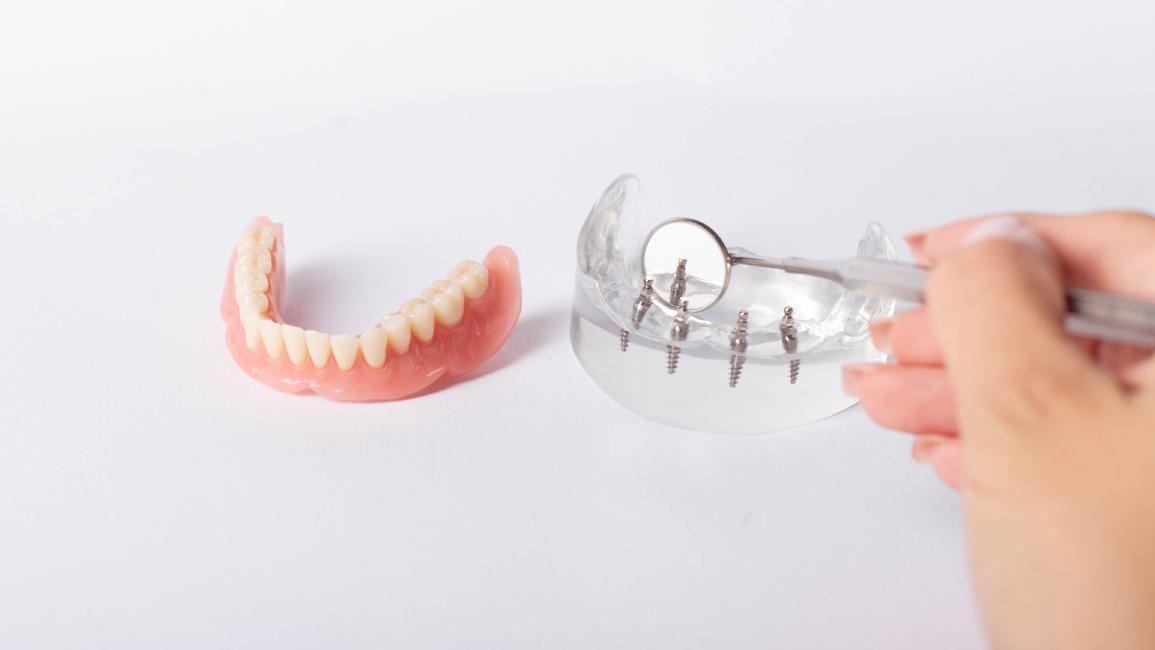
Two implants are placed vertically at the front of the jaw, where bone is naturally densest. The other two are angled at the back, typically tilted at up to 45 degrees to maximize contact with available bone and to avoid the sinus cavity in the upper jaw or the nerve canal in the lower jaw. A fixed bridge of replacement teeth is then attached to the implants. There are no adhesives, no nightly removal, and no slipping while you eat or speak.
Who Needs All-on-4 Dental Implants?
This treatment is designed for adults who have lost most or all of the teeth in one or both arches. You may be a good candidate if you have severely damaged or decayed teeth that cannot be saved, advanced gum disease leading to widespread tooth loss, or have been frustrated by loose, slipping dentures that affect eating and speaking. Active individuals who simply want to stop worrying about adhesives or daytime denture movement also benefit from the stability of a fixed solution. Patients with mild to moderate jawbone loss are often suitable as well, since the angled placement of the back implants can work with reduced bone volume and may eliminate the need for extensive bone grafting.
Who May Not Be a Good Candidate?
All-on-4 is not right for everyone, and a careful assessment matters. Patients with active, untreated gum disease will need that resolved before surgery can be considered. Heavy smokers face slower healing and significantly higher implant failure rates, so cessation is strongly recommended before and after the procedure. Uncontrolled diabetes and certain autoimmune conditions can also affect healing and integration. Severe jawbone loss, beyond what angled implants can compensate for, may require bone grafting before treatment can proceed. Your dentist will use a 3D CT scan and a full oral exam to confirm what is right for your situation.

How the Procedure Works
The full process is structured but generally moves quickly. Your dental implant surgery journey typically follows these stages:
- Consultation and planning. A full dental exam, panoramic X-ray, and 3D CT scan are used to assess oral health, bone structure, and the ideal implant positions.
- Preparation. Any infections or unhealthy teeth are treated or extracted, and the mouth is prepared for surgery.
- Implant placement. Four implants are placed in each arch under sedation or general anesthesia. The procedure usually takes a few hours per arch.
- Same-day temporary bridge. A temporary fixed bridge is typically attached the same day, so you leave with a working smile.
- Permanent prosthesis. Once the implants integrate with the bone, which takes around three to six months, your permanent prosthetic teeth are fitted.
Key Benefits of All-on-4
The appeal of this treatment goes well beyond the cosmetic. Full-arch restoration with only four implants per jaw means fewer surgical sites and often a faster recovery than traditional implant approaches that may use six or more implants per arch. The angled posterior implants reduce or eliminate the need for bone grafting in many cases, which simplifies treatment and shortens the overall timeline. The same-day temporary teeth let you eat, smile, and speak from day one, while the final prosthesis restores natural biting, chewing, and speaking function for the long term. Just as importantly, the implants stimulate the jawbone in the same way natural tooth roots do, which helps prevent the ongoing bone loss and facial collapse that traditional dentures cannot. With proper care, the implants themselves can last for decades.
On cost, the picture varies. All-on-4 dental implants cost depends on the implant brand, prosthetic material such as acrylic versus zirconia, and any preparatory work like extractions or grafting. Dental implants in Thailand are typically priced well below those in the United States, the United Kingdom, and Australia, which is one reason the country has become a destination for international patients seeking high-quality care at accessible prices.
Restore Your Smile at Nakornthon Hospital
The Dental Center at Nakornthon Hospital provides advanced dental implant services, including digital planning systems that support safe, accurate implant placement from the first consultation through final fitting. Treatment is delivered by experienced dental specialists using sterilized equipment that meets international standards, with care coordinated across implant surgery, prosthetics, and follow-up so your treatment plan stays consistent throughout.
If you are exploring full-arch restoration and want to understand whether All-on-4 is right for you, schedule a consultation with the Dental Center at Nakornthon Hospital today by calling +66-2450-9999 for a thorough evaluation and a treatment plan built around your oral health, lifestyle, and goals.
Contact & Appointments - Dental Center
- Facebook Fanpage: Nakornthon Hospital - International Patient
- LINE Official: @nakornthoninter
- Open: Daily, Monday to Sunday, 9:00 AM to 5:00 PM
- Tel: 02-450-9999 1346-1347
Frequently Asked Questions About All-on-4 Dental Implants
-
Q: What does before and after all-on-4 dental implants look like?
A: Before treatment, patients typically have multiple missing, broken, or severely decayed teeth, or struggle with loose dentures. After All-on-4, the same arch is replaced by a fixed bridge anchored to four implants, restoring a natural-looking smile and the ability to bite, chew, and speak normally. Most patients leave with a temporary fixed bridge on the day of surgery, with the permanent prosthesis fitted three to six months later once the implants have integrated with the bone.
-
Q: How to clean all-on-4 dental implants?
A: Brush twice a day with a soft-bristled brush and non-abrasive toothpaste, paying special attention to the gum line where the bridge meets the gums. Use a water flosser or interdental brushes to clean under and around the bridge, where regular floss cannot reach. An antimicrobial mouthwash, used as directed by your dentist, helps reduce bacteria. Professional cleanings every three to six months are essential, as a hygienist can reach areas you cannot at home.
-
Q: What are the problems with all-on-4 dental implants?
A: The most common long-term complication is peri-implantitis, an infection of the gum and bone around the implants caused by plaque buildup. Other potential issues include implant failure, prosthetic wear or breakage over time, and bone loss if the implant is not properly cared for. Heavy smoking, uncontrolled diabetes, poor oral hygiene, and missed professional check-ups all increase these risks. Most problems are preventable with daily cleaning and routine follow-up at a qualified dental center.
-
Q: How long do All-on-4 dental implants last?
A: The implants themselves, made of titanium, can last decades and often a lifetime with proper care. The prosthetic bridge attached to them typically lasts 10 to 20 years before needing replacement or refurbishment, depending on the material, your bite, and how well the restoration is maintained.

Free Online Consultation
Article of Dental Center