The Symptoms of Lung Cancer Most People Miss
Center : Cancer Center
Article by : Dr. Kittipong Udomdamrongkul

- Lung cancer is one of the leading causes of cancer death in Thailand and worldwide, with most cases diagnosed only after the disease has advanced because early signs are easy to dismiss.
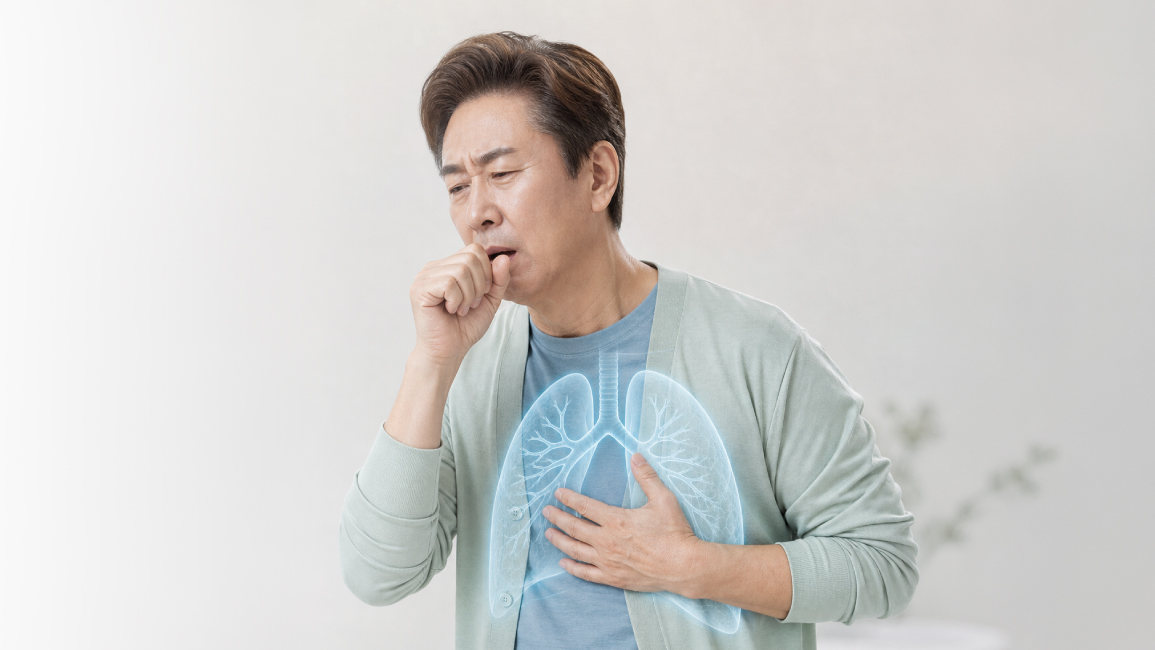
- The most common lung cancer early symptoms include a persistent cough, breathlessness, chest or back pain, hoarseness, and recurring chest infections. The clinical signal is persistence, not severity.
- Lung cancer symptoms in women are the same as in men, but women, especially never-smokers, are often diagnosed later because the disease is less suspected.
- Annual low-dose CT (LDCT) screening is recommended for adults aged 50 to 80 with either a 20 pack-year smoking history who currently smoke or quit within the past 15 years, or the presence of a strong family history of lung cancer.
- Any respiratory symptom lasting more than two to three weeks, or any episode of coughing up blood, should be evaluated by a doctor without delay.
Lung cancer is one of the leading causes of cancer death in Thailand and worldwide, yet most cases are not caught until the disease has already advanced. The reason is straightforward: lung cancer early symptoms are vague, easy to dismiss, or absent until a later stage. A nagging cough gets blamed on the dry season, breathlessness on age, and back pain on a long day at a desk. Knowing what to look for can shift a diagnosis from late stage to early stage, where treatment is far more effective.
Table of Contents
- What Are the Earliest Symptoms of Lung Cancer?
- A Note on Lung Cancer Symptoms in Women
- When Should I Get a Lung Cancer Screening?
- How Lung Cancer Is Diagnosed at Nakornthon Hospital
- Why Choose Nakornthon Hospital
- Take the Next Step for Your Lung Health
- Frequently Asked Questions About Lung Cancer Early Symptoms
- Free Online Consultation with a Specialist
What Are the Earliest Symptoms of Lung Cancer?
The earliest signs of lung cancer often overlap with common respiratory conditions, which is why they are easy to overlook. The clinical signal is persistence rather than severity. A symptom that lasts longer than expected, returns after treatment, or appears alongside others deserves a closer look.
Watch for these lung cancer early symptoms:
- Persistent cough. A new or worsening cough lasting more than two to three weeks, or one that produces blood or rust-colored mucus.
- Shortness of breath. Breathlessness during routine activities that did not previously cause it, such as climbing one flight of stairs.
- Chest or back pain. Dull, persistent discomfort that worsens when breathing deeply, laughing, or coughing.
- Hoarseness. A change in voice with no cold or throat infection to explain it, lasting more than a few weeks.
- Recurrent chest infections. Repeated bronchitis or pneumonia that does not fully clear, or that returns quickly after treatment.
- Unexplained fatigue and weight loss. Tiredness that does not improve with rest, often alongside decreased appetite and weight loss.
- Wheezing. A new whistling sound when breathing, with no history of asthma or allergies, that does not respond to standard treatment.
If any of these symptoms last beyond two to three weeks, or if you notice more than one at once, see a doctor.
A Note on Lung Cancer Symptoms in Women
The core lung cancer symptoms in women are the same as in men. The difference is in how quickly the diagnosis is made. Women, especially those who have never smoked, are far less likely to be suspected of lung cancer when they present with these signs, leading to later diagnoses.
According to the American Cancer Society's Cancer Statistics 2025, lung cancer incidence in women under 65 surpassed that of men in the United States for the first time in 2021. Women who have never smoked are also roughly twice as likely to develop lung cancer as men who have never smoked.
Genetics help explain the pattern. The EGFR gene mutation, which drives a large share of lung adenocarcinoma in non-smoking Asian women, is frequently associated with tumors located in the peripheral regions of the lung. Consequently, these peripheral lesions may present with symptoms such as back pain, breathlessness, or vague chest discomfort — distinct from the central airway symptoms like the classic smoker's cough, though overlap in presentation remains common. If you are a woman with persistent respiratory symptoms, ask your doctor specifically about lung cancer, even if you have never smoked.
When Should I Get a Lung Cancer Screening?
Annual low-dose CT (LDCT) screening can detect tumors before symptoms appear, when treatment works best. Current international guidelines recommend annual LDCT screening if you:
- Are aged 50 to 80
- Currently smoke, or have quit within the past 15 years
- Have a 20 pack-year or greater smoking history (for example, one pack daily for 20 years, or two packs daily for 10 years)
Talk to your doctor about screening even outside these criteria if you have a first-degree family history of lung cancer, significant exposure to radon, asbestos, or occupational carcinogens, or a history of COPD or pulmonary fibrosis.
See a doctor now, regardless of age or smoking status, if you have a cough lasting more than two to three weeks, have coughed up blood, or have unexplained breathlessness, chest or back pain, recurring chest infections, or fatigue and weight loss alongside any respiratory symptom.

How Lung Cancer Is Diagnosed at Nakornthon Hospital
Diagnosis at our cancer hospital follows a clear pathway designed to reach an accurate answer as quickly as possible.
- Low-Dose CT scan (LDCT). The primary screening tool for high-risk adults. Painless, takes around 10 minutes, and can detect nodules long before symptoms appear.
- Diagnostic imaging. A chest X-ray is often the first-line investigation, followed by a CT or PET-CT scan to confirm and stage suspected cases.
- Biopsy and molecular testing. A tissue sample confirms the diagnosis. Molecular profiling identifies gene mutations such as EGFR and ALK that determine which targeted therapies are appropriate for you.

Why Choose Nakornthon Hospital
Choosing where to be evaluated matters because the early steps shape the entire treatment journey. Our Cancer Center brings the full lung cancer pathway together on one campus, with a team that works on each case as a unit.
LDCT screening is available on site for adults 50 and over with a smoking history, or a strong family history and the complete diagnostic and treatment pathway is delivered in one place, including LDCT, CT, PET-CT, biopsy, molecular testing, surgery, chemotherapy, targeted therapy, immunotherapy, and radiotherapy. Every case is reviewed by a multidisciplinary team of oncologist, pulmonologist, thoracic surgeon, radiologist, and pathologist working together, with English-speaking specialists available for expatriates and international patients.
Take the Next Step for Your Lung Health
Lung cancer is most treatable when found early, and the simplest way to find it early is to act on lingering symptoms and to screen when you are at higher risk. If you are in a higher-risk group and have not yet spoken to a doctor about LDCT screening, or if a respiratory symptom has stayed with you for more than two to three weeks, do not wait. Make an appointment with our Cancer Center specialists today by calling +66-2450-9999 for a thorough evaluation and a plan built around your individual risk.
Contact & Appointments - Cancer Center
- Facebook Fanpage: Nakornthon Hospital - International Patient
- LINE Official: @nakornthoninter
- Tel: 02-450-9999 1390-1392
Frequently Asked Questions About Lung Cancer Early Symptoms
-
Q: What are the earliest symptoms of lung cancer?
A: The earliest signs include a persistent cough lasting more than two to three weeks, shortness of breath during routine activities, chest or back pain, hoarseness, recurring chest infections, unexplained fatigue and weight loss, and new wheezing. The clinical signal is persistence, not severity. A symptom that does not improve, returns after treatment, or appears alongside others deserves medical evaluation. However, most patients with early-stage lung cancer are asymptomatic; these malignancies are typically detected through screening programs targeting high-risk populations.
-
Q: When should I get a lung cancer screening?
A: Annual low-dose CT (LDCT) screening is recommended if you are aged 50 to 80, have at least a 20 pack-year smoking history, and currently smoke or have quit within the past 15 years or having a family history of lung cancer. Talk to your doctor about screening outside these criteria if you have a first-degree family history of lung cancer, significant exposure to radon or asbestos, or a personal history of COPD or pulmonary fibrosis.
-
Q: Are lung cancer symptoms in women different from men?
A: The core symptoms are the same, but women, especially never-smokers, are often diagnosed later because lung cancer is less suspected in this group. EGFR-driven tumors, which are more common in Asian women who have never smoked, often develop in the outer regions of the lung and may cause back pain or breathlessness rather than the classic cough.
-
Q: Can non-smokers get lung cancer?
A: Yes. While smoking is the largest single risk factor, non-smokers can develop lung cancer due to secondhand smoke, radon, air pollution, occupational exposures, family history, and specific gene mutations such as EGFR and ALK. Any persistent respiratory symptom should be evaluated regardless of smoking history. If you are searching for the best oncology hospital near me in Bangkok, our Cancer Center offers a complete lung cancer pathway from screening to treatment.

Free Online Consultation

Article of Cancer Center